Packaging Apple's box lid falls in slow motion on purpose. That's the whole packaging budget, right there.
One tiny sealed pocket of air is doing more to make you feel like you spent your money well than anything printed on the box.
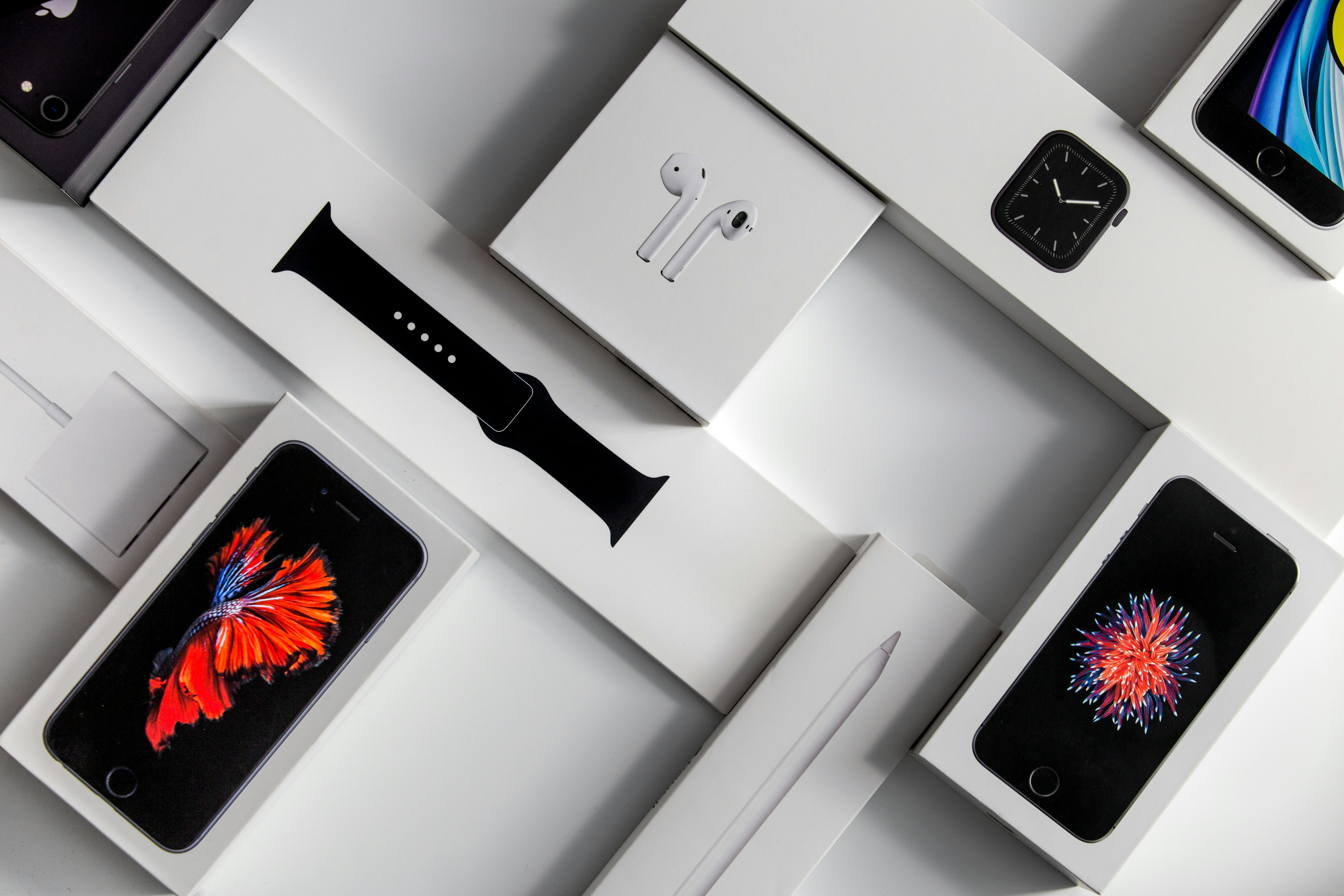
Take the lid off a new iPhone box partway, then let go. It doesn't drop. It sinks, slowly, evenly, like something invisible is lowering it the rest of the way down. There's no motor in there, no magnet, no clever hinge. The inner tray fits the outer sleeve so precisely that when you lift the lid, the air trapped underneath has almost nowhere to go, and the only way out is through one deliberately sized gap around the edge. The lid can only fall as fast as that gap lets the air escape past it. Slow the gap down, slow the fall down. That's the entire mechanism, and it's been tuned to a fraction of a second.
None of that engineering does anything for the phone. It's not a shipping requirement. It's not there to protect the screen. The box could be a flap of plain cardboard with a rubber band around it and the device inside would power on exactly the same. What the slow fall actually does happens before you've touched the product at all. It tells your hands "this was made on purpose," a full ten seconds before the screen ever turns on, using a sense you weren't paying attention to.
This wasn't a happy accident that an engineer stumbled into once and everyone quietly kept using. Apple has filed patent applications specifically covering packaging mechanisms, tray-and-sleeve systems engineered around exactly this kind of air-cushioned resistance, and the company reportedly maintains a dedicated internal testing space at its Cupertino headquarters built for one purpose: watching real people open boxes, over and over, to see how the unboxing itself feels. Jony Ive, who ran design at Apple for decades, has talked about this directly and without any of the usual corporate hedging: "Steve and I spent a lot of time on the packaging... You design a ritual of unpacking to make the product feel special. Packaging can be theater, it can create a story." Not "packaging protects the product." Packaging is theater. That's the actual design brief, stated plainly, by the person responsible for it.
Reporting on Apple's process has described teams spending months opening hundreds of prototype boxes, testing different tray materials, different sleeve tolerances, different resistance curves, before locking in a final version. That's not the schedule of a company solving a shipping problem. Shipping problems get solved in weeks. A schedule measured in months, spent entirely on how a box feels in someone's hands during the four seconds it takes to open it, is the schedule of a company that has decided the box is part of the product.
The box isn't packaging around the phone. For about ten seconds, it is the phone.
This is also why the mechanism scaled into something bigger than any one person's living room. The original iPhone got its own unboxing video on YouTube on June 30, 2007, only days after launch, and it wasn't the first unboxing video ever made, that distinction reportedly belongs to a 2006 upload of a Nokia E61, but it's the one that turned "watching someone open a box" into a real, durable genre instead of a novelty. By YouTube's own count, amateur unboxing videos across every category have racked up more than a billion views and something like 60 million hours of total watch time. Nobody sets out to watch sixty million hours of cardboard.
What they're actually watching is the reaction, not the box, someone else's hands discovering that slow, resistant fall in real time, someone else's face doing the tiny involuntary thing a face does when an object performs precision it didn't expect. The box was never just designed to feel good in one person's hands in private. It was designed to produce a legible, filmable reaction, the kind that reads clearly through a camera and makes a stranger three thousand miles away want to feel it too. A packaging decision engineered for a single unboxing moment turned into a packaging decision engineered for an entire distribution channel that didn't exist when the company started doing this.
None of this works on a body that knows it's being marketed to, which is the actual trick. The slow, resistant, controlled fall borrows a tell from a completely different category of object: a good watch case snapping shut, a well-fitted pen box, a solid door closing with a thud instead of a rattle. Damped, controlled movement reads as "built to a tolerance" to your hands before your conscious brain ever gets asked to weigh in. Apple didn't invent that instinct, nobody invents a reflex, it's just how mechanical trust gets signaled physically, on every well-made object anyone has ever handled. What the company did was notice the instinct already existed and aim a packaging budget at triggering it deliberately, consistently, at the scale of tens of millions of boxes a year.
And the "at scale" part is doing more work in that sentence than it looks like. The trick only survives contact with a hundred million boxes because Apple can hold the manufacturing tolerance that tightly, every single time. A smaller brand copying "the slow-fall lid" without that same manufacturing precision usually ends up with a lid that either jams halfway open or drops too fast to register at all, and the imitation reads cheap for the exact reason it was trying to read expensive. It's attempting the one specific physical cue that requires the most manufacturing discipline to pull off, and discipline is precisely the thing a copy is shortest on.
The other complication is that Apple has been quietly making this trick harder for itself on purpose. The company committed to removing plastic from its packaging entirely, and by its own 2026 environmental progress report, every Apple product now ships in fiber-based packaging, no plastic film, no plastic tray liner, made instead from molded pulp using materials like bagasse and bamboo fiber. Apple has credited the shift with avoiding more than 15,000 metric tons of plastic over five years, a figure the company itself compared to roughly 500 million plastic water bottles never made.
That sounds unrelated to a box lid falling slowly, until you think about what the original air-cushion trick needs: a tight, smooth, dimensionally stable seal between a rigid tray and a rigid sleeve, the kind of precision that injection-molded plastic makes relatively straightforward and that pressed fiber, a material that's naturally a little more variable, a little more porous, does not. Removing plastic didn't remove the engineering problem. It made the same problem harder, and Apple kept chasing the same sensory result anyway. That's a different kind of commitment than picking an appealing material once and never revisiting it. It's re-solving a solved problem under a self-imposed constraint, for a payoff that's still, fundamentally, a feeling in someone's hands.
The Tell Next time a box feels satisfying to open, stop and notice what's doing the work. It's never the printing, the color, or the font on the outside. It's weight, resistance, sound, and timing, sensory information your hands are reading whether you mean to pay attention or not. None of it is the product itself. All of it is a decision somebody made on purpose, on a specific line item, inside a specific budget, months before you ever touched the thing.
My take Good engineering and marketing spend, no contradiction required. What actually surprised me wasn't the trick itself, it's how openly Ive said it out loud. "Packaging can be theater" isn't a phrase most brands would risk putting on record.