Lighting & Imagery The ring light making your selfies glow was invented in 1952 to photograph the inside of someone's mouth.
A dentist named Lester Dine built it to solve a lighting problem in a confined space. Beauty vloggers inherited it decades later, for a completely different confined space: a desk.
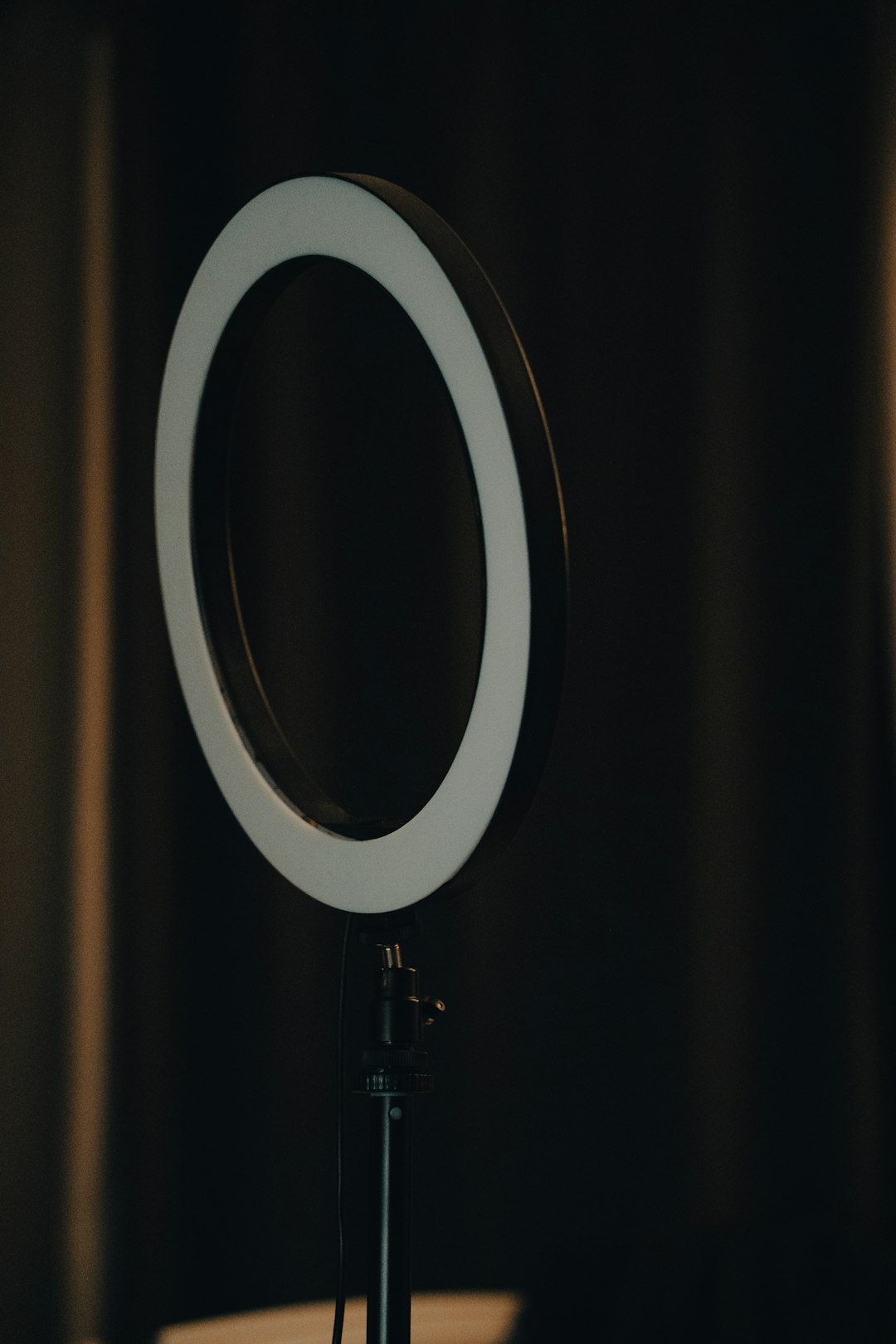
The ring light wasn't built for beauty content, or even for portraits. It was invented in 1952 by Lester A. Dine for dentistry, to solve an unglamorous lighting problem: getting even, shadow-free light into a small, dark, awkward space, the inside of a patient's mouth, where a normal off-camera flash couldn't reach without casting the photographer's own hand or the camera body as a shadow across the shot. A ring mounted around the lens, firing light from every direction evenly, solved that specific medical documentation problem outright.
From dentistry it spread to medical photography generally, for the same reason, a doctor documenting a lesion or a wound needed flat, shadow-free light so nothing got visually misread. From there it moved into macro nature photography, then jewelry and product photography, all applications that share one requirement: light a small, close subject evenly with no harsh shadow hiding detail. Beauty and vlogging didn't inherit the ring light because someone in that world invented it. They inherited it because a face at close range, on a desk, in a dim room, turned out to have the exact same lighting problem a dentist had been solving since the Eisenhower administration.
The visible trace of that light is called a catchlight, the small specular highlight a light source leaves behind in someone's eyes. Its shape is a direct trace of whatever was lighting the shot, a window leaves a soft rectangle, a softbox leaves a bigger rectangle, and a ring light leaves the shape it's named for, a perfect donut sitting right in the pupil. You can't fake the shape. It's a tiny mirror, pointed back at whatever was in front of the face when the shutter fired.
Ring lights got adopted by beauty and vlogging creators specifically for two things happening at once: the circular shape wraps light evenly around the whole face with almost no harsh shadow, solving the exact medical-photography problem it was built for, and it plants that same distinctive donut catchlight dead center in both eyes, which reads as more engaging and alive on camera than a flat, shadowless face with no highlight at all. One effect is inherited utility. The other is an accidental cosmetic bonus nobody was solving for in 1952.
The eyes do give it away. Just not the way anyone means when they say that.
This is also why a beauty dish and a ring light aren't interchangeable even though both produce soft, even, glowy skin. A beauty dish sits above and slightly in front of the face and gives a softer round catchlight with real shadow definition under the cheekbones, built for a single controlled studio shot with a photographer positioned off to the side of the lens. A ring light sits directly in front, at lens height, wrapped around the camera itself, built for something a single person can set up alone at a desk and keep perfectly consistent shot after shot with zero crew. Same broad lighting goal, completely different lineage, different tool, and a different signature left behind in the eyes every time.
That's why the shape of the catchlight is diagnostic, not trivia. It tells you what setup was used, which tells you whether you're looking at a one-person desk setup descended from a dental tool, or a full studio rig descended from 1930s Hollywood portraiture, regardless of what the final video claims about how effortless it all was.
The Tell Zoom into the eyes. A perfect donut means a ring light. A soft round blob means a dish or an octabox. A rectangle means a window or a softbox. None of it requires guessing, the reflection is a direct trace of the actual light in the room, and the tool itself carries a history most people filming with it have never heard.
My take It can't help but tell you exactly what it is, every single time, whether the creator mentions it or not, and it's been telling that same story since long before anyone was filming themselves for an audience. A dentist's problem, still solving a stranger's lighting problem seventy years later.