Lighting & Imagery Every "your skin but better" beauty ad is using a 90-year-old Hollywood lighting trick named after a shadow shaped like a moth.
George Hurrell built it to sell movie stars in the 1930s. It never stopped being the gold standard for making a face look sculpted instead of flat.
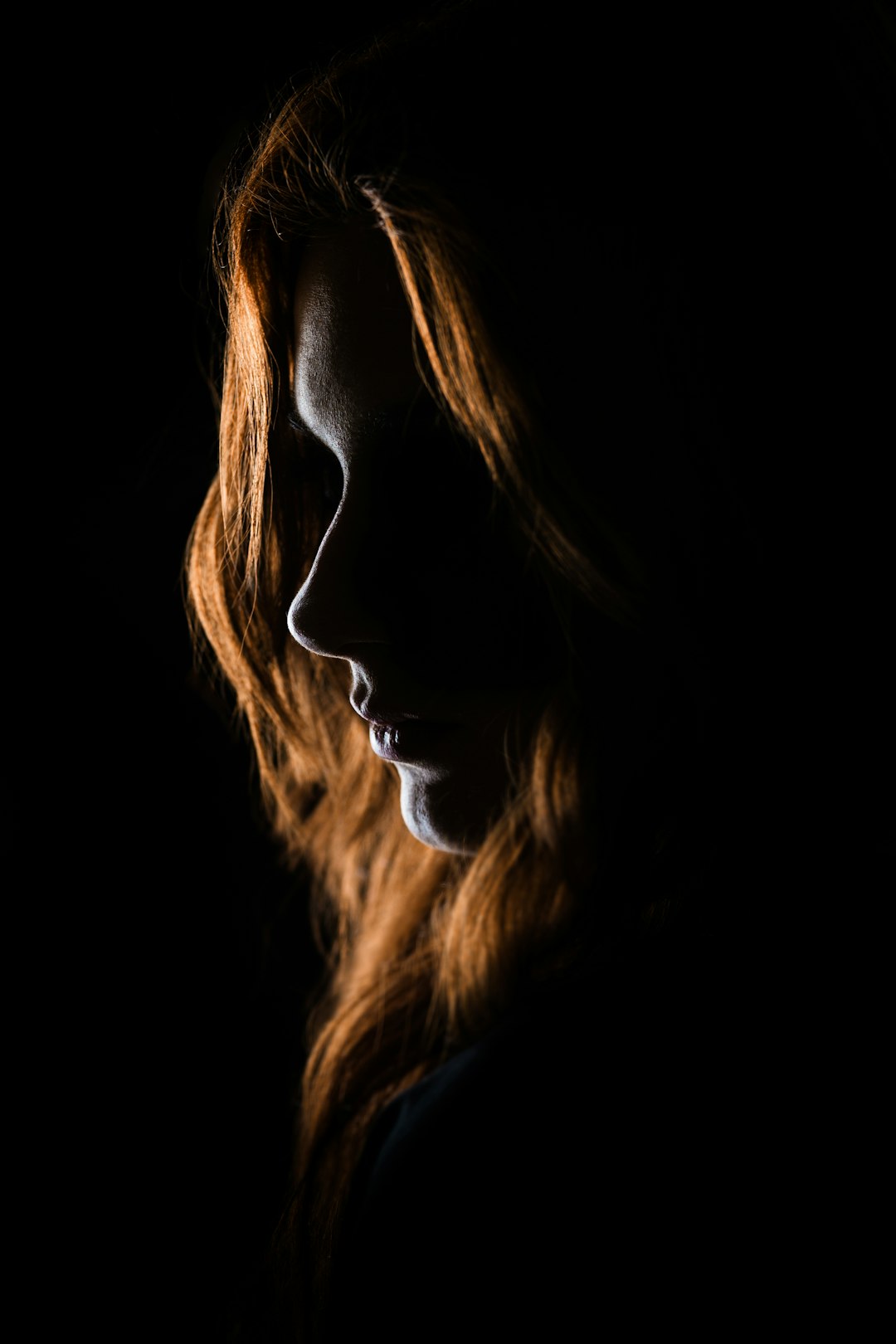
It's called butterfly lighting, and the rig itself is simple: one light, positioned high and directly in front of the face, pointing straight down. That single placement does one very specific, very deliberate thing, it casts a small, symmetrical shadow directly under the nose, shaped like a butterfly with its wings spread. That shadow is the entire point of the technique, not a flaw anyone's trying to hide.
George Hurrell is the reason this setup has a Hollywood name at all. He was born in 1904, trained as a painter at the Art Institute of Chicago, and only picked up a camera originally to document his own paintings, photography was the side skill, not the plan. He moved to Long Beach in 1925 and started building a photography career, and his break came through a personal connection: actress Norma Shearer saw his work and showed it to her husband, Irving Thalberg, who happened to run production at MGM. Hurrell joined the studio in 1930 and quickly became its principal portrait photographer, at a studio that marketed itself as having "more stars than there are in heaven."
From that job, Hurrell photographed nearly every major star of the era, Joan Crawford, Greta Garbo, Rita Hayworth, Humphrey Bogart, using the high, direct, downward light so constantly and so distinctively that the industry started calling it "Paramount lighting" after the studio most associated with the look. He wasn't hiding the shadow under the nose the way conventional portrait lighting of the time tried to. He was positioning people specifically so that shadow would land well, treating it as a feature to compose around rather than a defect to light away.
One detail says more about how deliberate this was than the lighting diagram does: Hurrell insisted on printing his own work himself, at a time when studio photographers routinely handed negatives off to a lab. That's not a stylistic flourish, it's someone refusing to let the final image leave his control at any stage, lighting through print. The consistency people now recognize as "Hurrell lighting" wasn't luck repeating itself. It was one person's exacting standard, enforced personally, thousands of times.
The most flattering shadow in beauty photography is named after an insect, and it's on purpose.
The mechanism underneath the name is straightforward: light coming from above and straight ahead carves definition into a face the way overhead sun does outdoors, cheekbones catch light, the hollow beneath them holds a little shadow, the nose reads sculpted instead of flat. Because the light source sits close to the face, the falloff is fast enough to visually narrow the jawline too. None of that is retouching. It's the same geometry a sundial runs, just angled at a person instead of the ground, and it explains why the technique reads as "flattering" to virtually anyone regardless of the era's beauty standards, it's exploiting how human depth perception reads shadow, not any particular decade's taste.
The technique didn't stay locked in the 1930s either. Hurrell's own career got a second act starting in 1965, when a solo exhibition at the Museum of Modern Art brought renewed attention to his archive, and he went on to photograph a newer generation of stars, Brooke Shields, Sharon Stone, John Travolta, using essentially the same light placement decades later. A setup that works identically well on Greta Garbo in 1932 and Sharon Stone in the 1980s isn't a trend that happened to last. It's a piece of physics that never had an expiration date to begin with.
The Tell Look under the nose. If there's a small, symmetrical, downward shadow shaped roughly like a butterfly, and the cheekbones look lifted while the jaw looks narrower than it probably is in person, that's this exact setup, not a filter and not a coincidence. It's one light and one decision about where to point it, made the same way it's been made since 1930.
My take Ninety years old and still undefeated. If a technique is still the default after that long, across that many decades of shifting beauty standards, it's not a trend, it's just how light works on a face.